

The Royal Astronomical Society (RAS) is demanding urgent action to address the damage light pollution is doing to astronomy, human health, biodiversity and the natural environment.
It follows an influential conference on the issue hosted by the RAS last year, where compelling evidence was presented about the significant impacts of artificial light at night.
Exposure to light pollution and lack of natural sunlight can lead to poor metabolism and the development of diseases such as type 2 diabetes, obesity, dementia, Parkinson's, and retinal problems. There is also evidence to suggest it directly impacts a person's mood and increases the prevalence of depression and anxiety.
It is not just humans who are affected either. The impact of artificial light on the natural environment is significant.
It can alter habitats, fragment ecosystems, and accelerate biodiversity loss, especially among the many nocturnal species that rely on natural darkness to survive. Artificial light and light pollution can also compromise the view of the night sky for both astronomers and the general public.
To counter this, the RAS is calling for artificial light at night to be legally recognised as a pollutant.

The Society also believes nighttime should be recognised as an integral part of the natural environment, requiring protection on a par with daytime activities to strengthen conservation efforts.
Co-organiser of the conference Marieta Valdivia Lefort, Policy & Diversity Officer at the RAS, said: "It is not just optical astronomy that's affected by light pollution and artificial light at night.
"There is increasing scientific evidence that both are having a significant and lasting impact on the natural environment and human health."
Marine biodiversity has suffered, caterpillar populations have declined by 52 per cent in areas exposed to street lighting, and evidence shows around one-third of insects drawn to artificial light sources die due to exhaustion, predation, or disorientation.
Light pollution also reduces plant-pollinator interactions by up to 62 per cent, significantly impairing pollination and plant reproduction.
"To reverse this devastating damage, we need swift and effective action from both policymakers and legislators before it's too late," Valdivia Lefort added.
In the case of the UK, the RAS believes discussion about light pollution should be placed within the broader context of the UK's environmental governance, specifically via the Environment Act 2021.
This enshrines the Environmental Improvement Plan (EIP) into law and introduces binding targets, such as halting species declines by 2030, as well as strengthening environmental governance through mechanisms like the Office for Environmental Protection.
While the Act does not yet include light pollution as a direct target, it opens a potential policy window for its inclusion through secondary legislation.
The RAS recommends ways to address light pollution be based on the five principles of responsible outdoor lighting, which include:
- Lighting with a clear purpose;
- directing light only where it is needed;
- reducing light intensity;
- using light only when necessary;
- choosing warmer coloured lighting.
The public can also do their part by switching off lights where and when they are not needed and using lower temperature LED lighting rather than bright white.
Reducing light pollution is essential to protect optical astronomy – and the RAS has already been collaborating with legislative initiatives in pursuit of this aim.
One of these is the All-Party Parliamentary Group (APPG) for Dark Skies, which was created in January 2020 and has been providing a forum for parliamentarians and organisations across the public, private and third sectors to discuss issues regarding ground-based light pollution and visibility of the night sky, advocating for dark sky lighting and reformed planning policies.
In support of the APPG, on 30 January 2025 the RAS organised a one-day conference on light pollution and its impacts. The conference featured four sessions, covering topics such as policy and regulation, the environment and biodiversity, and human health.
To read the full report from the conference, click here.
ENDS
Media contacts
Sam Tonkin
Royal Astronomical Society
Mob: +44 (0)7802 877 700
Dr Robert Massey
Royal Astronomical Society
Mob: +44 (0)7802 877 699
Marieta Valdivia Lefort
Royal Astronomical Society
Images & captions
Light pollution conference (1)
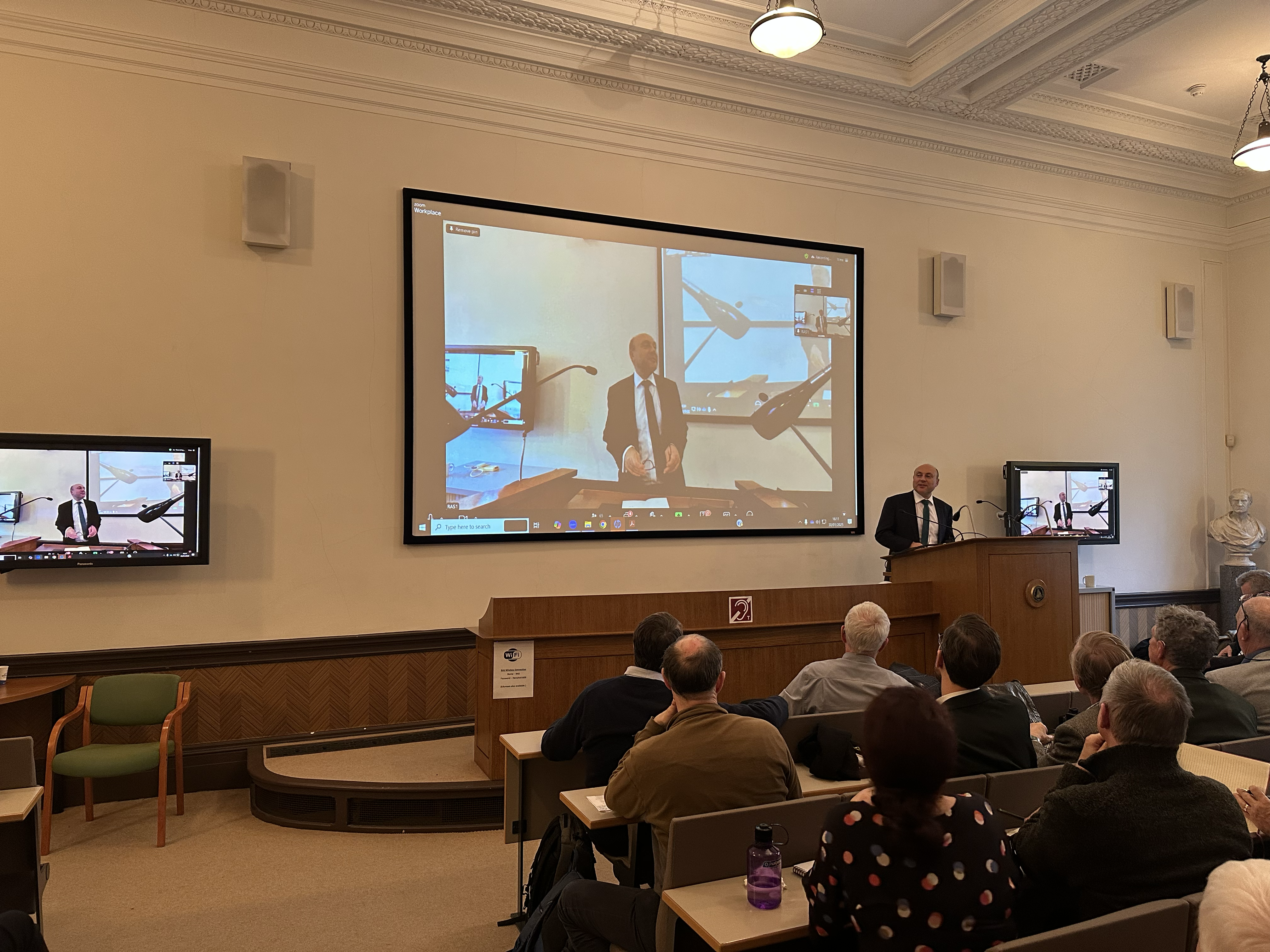
Caption: Marieta Valdivia Lefort, Policy & Diversity Officer at the RAS, addresses the conference on light pollution and artificial light at night.
Credit: Royal Astronomical Society
Light pollution conference (2)
Caption: The conference was chaired by Andrew Griffith MP, the former Minister of State for Science, Research and Innovation.
Credit: Royal Astronomical Society
Notes for editors
About the Royal Astronomical Society
The Royal Astronomical Society (RAS), founded in 1820, encourages and promotes the study of astronomy, solar-system science, geophysics and closely related branches of science.
The RAS organises scientific meetings, publishes international research journals, recognises outstanding achievements by the award of medals and prizes, maintains an extensive library, supports education through grants and outreach activities and represents UK astronomy nationally and internationally. Its more than 4,000 members (Fellows), a third based overseas, include scientific researchers in universities, observatories and laboratories as well as historians of astronomy and others.
The RAS accepts papers for its journals based on the principle of successful peer review, following which experts on the Editorial Boards accept the papers for publication. The Society issues press releases based on a similar principle, but the organisations and scientists concerned have overall responsibility for their content.
Keep up with the RAS on Instagram, Bluesky, LinkedIn, Facebook and YouTube.
Download the RAS Supermassive podcast